Live Procedure - Histotripsy: A Noninvasive Ablation Procedure for Liver Cancer
Previously Recorded: Tuesday, March 24th, 2026 | 5 PM ET
Watch as Roswell Park interventional radiologist Dr. Omar Hasan explains and demonstrates a new noninvasive type of ablation therapy offering new hope for patients with primary liver cancer or liver metastases. Using the Edison® Histotripsy System, high-intensity sound waves are used to destroy tumors in the liver. Dr. Hasan will take you through how this technology targets and breaks apart tumor tissue without any incisions, needles, probes, or ionizing radiation. He will also discuss the advantages of this approach, including its ability to treat difficult-to-reach tumors, reduce complication risks, and often achieve results in a single treatment session.
Stay until the end for a live Q&A session, where Roswell Park’s interventional radiologists will answer your questions about eligibility, treatment expectations, and how histotripsy is expanding options for patients who may not qualify for more invasive therapies.
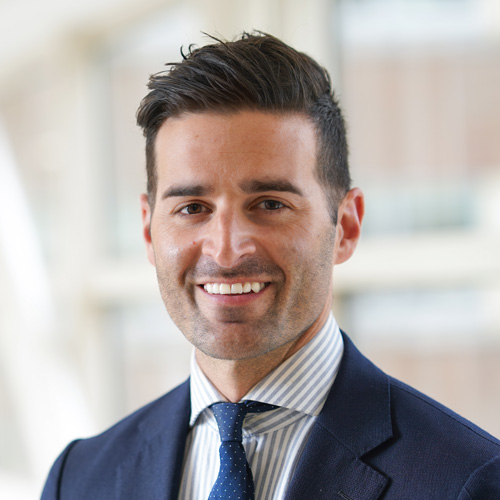
Moderator
Director, Interventional Radiology
Department of Diagnostic and Interventional Radiology
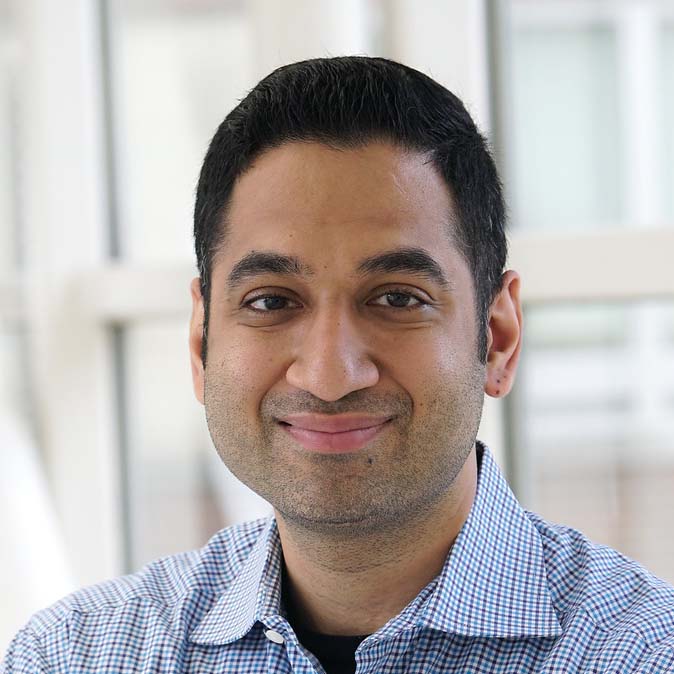
Surgeon
Department of Diagnostic and Interventional Radiology
Hello, I'm Omar Hassan. I'm one of the interventional radiologists here at Roswell Park. We'll be doing a histotripsy procedure today. Um, it's a novel ablation technology which uses ultrasound waves to create cavitation in liver tissue. Right now, I have a patient, um, with metastatic colon cancer with a solitary liver lesion. Um, currently he's under general anesthesia. Um, we're going to prepare to do the procedure. So the first thing we're going to do is we're going to, um, identify the lesion in the liver on ultrasound. Yes, this patient had a, had an MRI done which showed the solitary, uh, metastasis, so we're going to treat this since this is his only sight of disease. So what I'm gonna do now is to kind of mark where my ultrasound, um, transducer is. Noting the angle that I have. I don't really have much of a um upward deviation here on the ultrasound probe, cause again, The ultrasound probe is going to be just how the treatment head is going to be on the patient. So, now what the technologist will do is they'll set the water bath up on the patient. Hey, guys, can I just look at the ultrasound one more time before we put the, the bath on? Just, just look, I wonder if it's just a little bit bigger now. Yeah, I mean, I feel like, Your vessels. Match up, yeah. So, basically, the, the water serves as the ultrasound medium, essentially the gel, uh, which the ultrasound waves are transduced into the patient. So, have to, so typically we use ultrasound gel, but we'd have to use a whole lot of ultrasound gel to fill that bath. So, we use degassed water and it works pretty well. So, they're going to start filling the bath up so that cart, actually, we put water in that cart, and it usually takes, uh, about an hour or so for it to degas the water. So we typically put about 13 gallons of water within the um uh. Within the tank, so it it actually gets to be quite heavy. So we like to have the patient positioned and the position we'll be doing the treatment in before we start putting the water bath in. It's more difficult to change the patient's position once the waters in the bath. So at the bottom of the water bath is a permeable membrane, and basically what they're doing, there's a little squeegee essentially to ensure that there's no bubbles within that membrane. And again, even though we're doing this in a procedural room, this is actually a non-sterile procedure, since there's no incisions being made. Good for the water? I think that's enough water, yeah. So, I'm afraid when we put the treatment head, it's going to overflow a little bit on that side. Typically for ablation, we've been using thermal ablation either with heat or cold. The benefit of histotripsy is that histotripsy tends to preserve critical collagen rich structures like blood vessels and bile ducts, so we're able to treat more centrally than we were able to. Now this is a more peripheral lesion. It certainly allows us to treat areas we wouldn't have been able to treat previously. So now we have the treatment head over the water bath. Going to connect to our ultrasound machine here. So there's actually an ultrasound probe within the treatment head itself, which allows us to visualize, uh, what we're doing. She's just plugging an ethernet cable in so that we can get the pictures onto packs afterwards. So basically what this does is this starts a treatment session, um, so we have the patient's name. And then, uh, basically treatment description. Um, so we're going to do liver, we're going to put my name, the date, and then we're going to, Uh, start the session. So we just confirmed the room set up. Uh, we can, we've done all this where we position the membrane, we position the patient on the bed. We've got the support arm. We've done all this already. We've removed the body air. We've done the, um, castor oil. We've marked our target location. We removed ultrasound gel. We've done our water bath and we filled the bath up to our desired level. So we positioned our treatment cart now. We're going to lock our treatment cart, or locked. I'm going to confirm the wheels are locked. And then we're going to level our treatment head here. Perfect. And then we do a buoyancy calibration, so we bring the treatment head. Into the water just a little bit, and then that calibrates that. And now what I'm going to do is, um, position the treatment head, um, over the tumor. So I'm going to do this using, um, this is called the space mouse. Uh, my many years of playing video games have finally come in handy. So we're just gonna Position the treatment head the way that we want. And then I can bring the ultrasound probe down. I think I need to go a little bit higher, guys, um, so if we, yeah, with the bath, so 12. There we go. Try that. Ready? So, now, we need to, so, that's our target. So, we're going to move. translate up a little bit. Like that. Questions either. One last thing, can you put his lung on suction and see how he tolerates it? So, anesthesia is really important for this procedure. Uh, we typically use, um, dumin intubation to isolate the right lung for tumors in the right liver, um, to prevent, um, essentially it freezes the respiratory motion of the liver and allows us to do the treatment. No, I mean, it definitely opened it up. Now, it's just hiding behind the rib. Let me get the handheld back, guys. It's just things have changed. There it is. OK, so. You're right. I'm a little bit further back and I need to angle up a little bit. OK. You got it? Yeah. OK. There we go. It's falling. That looks pretty good. Let's go back to this. Turn back into Axial. Still happy with it. Perfect. Yeah, much better. OK, perfect. So, this is where we're going to check for bubbles now, now that we have our, um, treatment plan, um, in place. So, we want to make sure the treatment head is completely submerged. So, now we're going to start calibrating the voltage. We're going to switch the ultrasound to histotripsy mode. So, we're going to turn our voltage knob on and we'll, so, it's very important because we're going to hear a sound. So you hear that? So it's a sputtering, but we wanna hear it. Like that So we're testing all the different points and we're setting up the optimal voltages for the, the treatment. All right. So, 17 minutes, 54 seconds is going to be the treatment time. We'll add a couple pauses just for cooling, probably at, I'll say 12 and 9 minutes. Yep, OK. All right. We are paralyzed. We are deeply paralyzed. OK. So, we're going to start our treatment. So, treatment's automated. So, we're going to enable voltage knob, and we're going to start our treatment. So you can actually see the sphere here, so that's the. Basically that's the treatment plan that we made was this sphere and it's gonna, the treatment arm is going to execute that treatment plan. If you want to look really closely, see these bubbles here, that's actually the cavitation within the tissue happening. And we wait. So, it'll be 27 minutes cause we had 25 minute pauses for cooling. So, we'll do the treatment. Um, we'll bring the treatment head out of the water bath. I will take a look with the handout ultrasound to make sure that I'm happy with my treatment zone. Uh, and then we'll disassemble the water bath, wake the patient up, um, bring him back to recovery, and then we'll typically do a, um, CT one hour after the procedure to confirm that we ablated the lesion that we wanted to. Usually I just watch people for 22 to 3 hours after the procedure. They go home the same day and usually only need pain medicine for that 2 to 3 hours. Typically don't need to send people home, uh, with narcotic pain medicine. Usually Tylenol or ibuprofen is, is acceptable. 10 years ago, we probably would have used RF ablation, uh, which would require, um, placing a, a ablation probe within the lesion in the liver. So we use an ultrasound or CT machine, um, to, Physically place a probe in the liver making an incision, um, and then using heat to destroy the tumor. Thankfully our ablation technology has gotten much, much more sophisticated with this we don't even have to make an incision, but even our newer microwave systems are far more efficacious at ablation than the older RF radio frequency ablation systems. You know this lesion is sort of deeper, um, so I would expect fairly minimal pain with this. We will premedicate him with some. Uh, pain medicine before he wakes up to ensure that, um, he's not in pain. Lesions closer to the surface of the liver are typically more painful, um, just because of the nerve endings. They live on the surface of the liver. Um, what I, what people have described to me is when they wake up, they feel like they've been kind of punched in the side. Obviously, certainly we, uh, make sure they're well medicated for their pain afterwards. So there's thermal energy being deposited, um. Through the subcutaneous tissues as well as the skin. So we're gonna do a quick treatment pause here for 5 minutes just to prevent any skin injury, um, from the, from the thermal energy that's transmitted through. All right, so, um, can somebody set a timer for 5 minutes? All right, so we just wait 5 minutes. The unique thing about this is that there are different, um, Treatment intense, right? So you can look for a curative intent treatment for a small lesion, you can try to shrink a larger lesion, you can try to, um, maybe treat a lesion that's close to a critical structure that potentially could then, you know, be surgically removed, um. We could potentially try to treat a lesion to try to stimulate an immune effect, um, so you know there's a lot of different, um, reasons we can do this procedure. We can also do this procedure in patients that have multiple lesions, but let's say they're on chemotherapy and the chemotherapy is keeping the other lesions at bay. But let's say there's one lesion that's growing, something that we call oligo progression, and we can treat the lesion that's growing, um, and let the chemotherapy, um, do its thing. You know, the non-invasive nature of the, the procedure is really beneficial in the sense that patients can stay on their chemotherapy just because it's so noninvasive we're able to, to get away with these things. So I'm gonna start this back up. So, we'll do three more minutes of treatment and then we'll do another pause. Shani, can you point out the bubble cloud to them so they can take a picture of the video of that? And I think we're by the rib right now, but when it sort of turns back into the liver, definitely show that to them. Because that's the magic. Yes, you see that white right there. Yeah, so that white, think of it as a a little blender basically within the liver, and it's actually mechanically destroying that part of the liver. it's as if we went in there and surgically resected that area without actually having to cut open the patient, so it basically becomes a liquefied lysate which then the body's immune system then just cleans up. When they did their initial feasibility studies for histotripsy in human and liver, they found that, so they did 8 patients. 2 of those 8 patients had immune responses outside of the treated areas and so the thought. Is that because this is a mechanical destruction of tumor tissue that potentially there's preservation of some, you know, anti-tumoral antigens that the body's immune system can then attack and potentially treat other areas. There's a case that I saw on a patient with metastatic colon cancer where they were going to go in for surgery and they, they treated with histotripsy. And then they scanned the patient before surgery. And Six other lesions that were not treated with hyotripsy shrunk. So, so clearly there's something going on with the body's immune system that, um, um, that needs to be studied and researched to say, to say, hey, look, there's something, something valuable that, that this is causing. Because the problem with, with thermal ablation and radiation, for example, you get upregulation of a lot of negative, um, immune factors as well, um, that the body has to clean up the, the, the heat damage essentially from, from the radiation or the, or the thermal ablation. With this, you don't have that. You're basically just pulverizing the tissue and you're maintaining the, um, I guess Genetic backbone of of what was basically obliterated. So, and then the body's immune system can sort of um. Can can pick up those signals and potentially treat other areas. Yeah, so yesterday we did a pretty deep tumor, we didn't have to do any breaks at all, so we cheat the system, we cheat the algorithm by adding these, uh, extra, extra cooling pauses just to prevent any thermal injury to the skin. So the future of this is going to be different organs, right? Different organ systems. So, um, FDA approved for liver, I'm hoping to, you know, FDA approval is in process for pancreas and kidney. Uh, probably beyond that would be the next organs would be prostate, soft tissue tumors, thyroid. The other thing is the, the treatment, the treatment heads have a depth limitation of about 14 centimeters. Larger treatment heads for deeper lesions. Smaller treatment heads for superficial lesions, um, that's, that's where the technology is going. It's opened up different, different treatment paradigms, right? So certainly with the more central lesions, um, that we wouldn't have been able to treat with thermal ablation in the past have opened up for, for us. Yesterday we did a case where the lesion was located in a very central area. And the patient initially saw a surgeon and said he'd probably need a full right liver resection to treat this 2 centimeter tumor where we're able to treat with histotripsy in the same day setting just because of the anatomical location of the tumor sitting on the portal vein bifurcation, so. OK. You can, um, you can actually. It tells you how far along you are in the treatment. For somebody like myself that grew up with iPhones, iPads, video games, this is. It's, it's very user friendly for me. Part of what makes this easier for me as a radiologist is a very proficient in ultrasound, and this is essentially a very fancy ultrasound machine. Again, you're targeting using ultrasound, so being able to have those ultrasound skills really, you know, make this procedure a lot easier. I know in other places, um, where, where surgeons are doing it, I know they have to have an ultrasound technologist in the operating room with them, so, um. You know, being confident. Uh, with the, with ultrasound really makes a big difference in this procedure. Obviously working at a high volume cancer center and doing lots of percutaneous ablations, the skill set lends itself pretty um favorably for this one. You know how I put the ultrasound head down so I can see the lesion better. Um, they're working on making a treatment head where we can do that while during the treatment where we can't do that while the treatment's ongoing. So it'd be nice to sort of see kind of how things are, are, are, are propagating um. The other thing is, um, this room has the ability to do what's called a cone beam CT scan. So potentially for a lesion that we could not see with ultrasound, you could have the patient put them in the position, do a CT scan, and then fuse the CT scan into the software and then do the treatment that way. This does have fusion capability where you can take an outside CT and fuse it into the um into the software. I find it's not as helpful because the majority of our procedures are done in the left lateral position where the majority of the CT scans are done supine, and I'm just excited about expanding our our scope actually, you know, we're just doing liver right now. Like I said, once we get kidney and pancreas on board, I really think it's going to be a huge game changer, especially for pancreas patients because unfortunately there really isn't a whole lot in terms of um for for pancreas cancer. That's the other nice thing about working at a comprehensive cancer center, you know, we're going to start studying. Um, The why and the how um. You know, A, we're going to study new indications, but also B, we're going to study why, you know, why is there an immune response in some patients and not in others, and see, you know, if, if there's something that we can, um, Um, Supercharge or prime the body's immune system to, to, to treat these tumors. Um, people think of procedures and chemotherapy or immunotherapy as mutually exclusive, but I, I, I, I think we need to start thinking about how we can use our interventional procedures to um Improve the efficacy of of different chemotherapies or immunotherapies, so in combination. So, we're going to, so we are done. We're going to deactivate our voltage knob. We're going to bring our treatment head out of the bath, and we're going to use the handheld probe to look at how we did. So you could see, you could see that area in the liver is completely. Destroyed, so you see that dark. So, I'm pretty happy with it. So, um, what we'll do now is we'll, um, We will empty the water bath. We will end the exam here and we'll wake the patient up. Yes, that was our procedure. Roughly took about an hour, hour and a half. If we include the anesthesia prep. Uh, we do put a Foley in every patient. Um, we'll remove that before they wake up. Um, and we'll get them back over to recovery and, uh, we'll get a CT scan and, um, get them out of here probably about 2 to 3 hours from now. Good evening, everyone. My name is Doctor Michael Petrozzo. I'm the director of interventional radiology here at Roswell Park Cancer Center. And tonight we're joined by my colleague, Doctor Omar Hassan, who is the director of our histotripsy program. Uh, and today, now we're gonna transition into our question and answer section of the webinar. Uh, we just saw a really insightful video giving us really a good look at what a patient experiences and what the procedure entails, and now we're gonna get to your questions. So, first off, Omar, uh, so how many patients have received hytotripsy at Roswell Park thus far? Thanks for the introduction, Mike. Um, yeah, so, so far we've done about 30 patients so far. Excellent. And Uh, one of our initial questions coming in, in terms of effectiveness, uh, at achieving the desired local control result, how does this compare to microwave or RF ablation options? Yeah, so we've, we've, we've found that histotripsy is non-inferior to other ablative options and has similar local control rates for, um, small lesions. Excellent. Uh, next question. Uh, so does preservation of non-tumor tissues make this a superior option for repeat local control efforts for metastatic patients facing recurrences? Yeah, I mean, I think, uh, you know, we're able to be very precise with our, with our treatments. I think the, the real benefit of histotripsy is that. We're really able to treat patients, um, A, it's non-invasive, so, um, patients, it's a same day procedure. They can stay on their blood thinners, they can stay on their chemotherapy, um, but really, we can treat in, in, in more sensitive areas that we weren't able to treat before, um, with thermal ablation, and I think that's really where histotripsy is gonna, um, help us in terms of, uh, armamentarium in terms of treating liver cancers. Excellent. Next question here is, uh, if you had done 5 sessions of SBR treatment, the tumor has shrunk, but this tumor still exists, like a riddle. Yeah. Uh, can you still go for histotripsy? Yes, you can still do histotripsy. I've, I've, I've done these patients, uh, you know, I've treated, uh, a couple patients like this before with hisotripsy with, without any adverse side effects. Yeah. And you're not destroying the, the tissues with sort of the thermal ablations. You can sort of feel a little bit more confident about the safety, right? Yep. Uh, are there any, uh, comorbidities that would prohibit a patient from this procedure? So, unfortunately, right now, hytotripsy is done with general anesthesia. Uh, part of the reason for general anesthesia is to limit patient motion. So, uh, unfortunately, a patient that wouldn't be a candidate for general anesthesia would not be a candidate for the procedure. Um, other comorbidities would be, you know, severe liver dysfunction. Um, we're talking, you know, bilirubins and the, you know, You know, 567 range, um, and then somebody that has, um, you know, multifocal tumor, I would say somebody that has, you know, a, a liver with like 50 tumors, I think would probably not be a good candidate for this procedure. And you do a prep procedure ultrasound as well, right, to determine. Visualization. Make sure they're a good candidate in. Yeah. So, yeah, so, typically, the patients will see, see us in clinic beforehand, uh, and during that clinic visit, we do, uh, what's called a prescreening ultrasound to ensure that, A, we're able to visualize the lesion and it's in a safe, uh, a place for us to perform the procedure. Excellent. Next question. So, what is the standard follow up care following the procedure? So, immediately after the procedure, we get a CT scan with contrast to ensure that we covered the area, um, that we want to treat. And then typically we'll see the patients back in clinic in six weeks with labs and another CT or MRI, depending on what their baseline imaging was. Um, and then really if, uh, so let's go to the next question. What is the success rate of the procedure? Yeah, so, um, pretty similar to, um, thermal ablation we're looking at for, for lesions less than 3 centimeters and the hope for liver study we're, you know, 90 to 92% efficacy in terms of local control. So very, very similar to, um, published data for thermal ablation. If you were to put this in sort of your, uh, sort of armamentarium of what you treat for, uh, ablative options, right? We've always had microwave, we've always had cryoablation. So far, where do you think you're putting this as far as where you're using it on what types of patients? Yeah, I think really, I mean, we can use this from so many different types of patients. So, obviously we have the, the, you know, small HCCs that we can do for curative intent. We have, you know, I think that where, where I'm seeing, um, the growth is, is metastatic pancreas patients, you know, typically we aren't doing liver directed therapy for patients that have metastatic pancreas cancer, but because of the non-invasive nature of the ability to stay on chemotherapy, I'm seeing it. Um, in those populations and then also lesions in sort of really central areas or, or sitting very, um, you know, on, on critical structures, you know, the, the nice thing about histotripsy is it preserves those critical structures like bile ducts and blood vessels, so I'm able to treat. Um, you know, the central lesions that we wouldn't be able to treat before with, with thermal ablation because we're worried about, um, injuring a bile duct or, or causing a, a, a thrombus in a, in a major vein. Uh And so next question, how many rounds of hystertripsy can a patient receive if more than one is needed? Yeah, so it completely depends on the patient, right? So, I mean, if you have 3 lesions, then we can do, um, you know, 3 sessions of hytotripsy. Um, if that patient 6 months down the road recurs, certainly we can, as long as the patient has normal liver function, I think we can repeat the procedure at the, the, the rate limiting step, uh, step obviously is the patient's liver function and to make sure that. You know, the liver function's preserved and, um, you know, they have, um, lesions amenable to the, the procedure, but certainly it's a procedure that can be repeated if need be. Uh, can you give us a quick run-through of sizes that are optimal, borderline, or not treatable? Uh, just the general range of what works and what won't. Yeah, so there are definitely some limitations. Um, so the, the, the max size that we can do right now is 4 centimeters. Um, now, typically if we have a You know, like a 5 centimeter tumor, we can do 2 or 3 overlapping treatment zones. Um, so certainly that's not, um, I've, I've read people doing 10 centimeter tumors with 6 overlapping treatment zones. So it's, you know, it, it, it's more just it takes more time, um, but certainly I think the, the, the sizes that would be optimal are similar to thermal ablation, you know, we're looking at the less than 3 centimeter lesions, um, in terms of, um. There is a depth limitation of about 14 centimeters, so, um, so. You know, lesions that are really, really deep, um, potentially could be an issue, but obviously there are ways that we can position the patient in a way to, to bring that lesion closer up, um, and, and overcome those depth limitations, um, but. Um, yeah. What, what do you tell patients to expect when they go home from this procedure? Yeah, so, it's a same day procedure. Um, I think it depends on the location of the lesion. The liver is a really unique organ in the sense that the majority of the, um, nerve endings of the liver are on the capsule of the liver or the surface of the liver. If some, if the patient has a capsule or a lesion, I'll expect them to have, you know, some discomfort after the procedure that we'll treat with narcotic pain medicines in the recovery area and then I'll usually send them home with, um, either some, um, Uh, low dose narcotic pain medicine or some steroids to help with the inflammation after the procedure. This is a tricky question. Do most insurances cover histotripsy? So, histotripsy is approved for Medicare, um, and, and most, most, uh, commercial insurances, including Blue Cross Blue Shield do cover the procedure. So. You sort of alluded to it in the video, but can you talk to us a little bit more about the episcopal effect? We seem to always be chasing this as interventional radiologists. Yeah, so, sort of. Yeah, so, So the abscopal effect essentially is, so let's say you have, you know, 8 tumors in the body and you treat one of them, and then after the procedure, for whatever reason, that, uh, that procedure triggers an immune response and you get a response in the other 7 tumors. That's what we call the abscopal effect. So, The thought with histotripsy is that since it's such a unique mechanism of action, it's actually a mechanical destruction of the tumor as opposed to a thermal ablation with, or radiation therapy, for example, you, where there's actual thermal destruction of, of, of the liver, that that thermal destruction or that destruction from radiation, uh, may actually. Um, create actually negative immune, um, factors in the body because the body actually has to clean up that thermal injury that happens from thermal ablation, whereas with histotripsy, it's just a mechanical destruction, you get what's, um, um, after the procedure, you get a, what's called an acellular lysate. Um, and that lysate is essentially reserved by the body, and the thought is that maybe. Within that lysate, there's, you know, exposure of some antitumoral antigens that maybe the body's immune system can sort of hone into and maybe, um, you know, treat the other areas or, or, or, or, you know, make it easier for the body's immune system to treat, um, that area. It's really interesting that we talk about the abscopal effect. When they did, um, the first feasibility study of 8 patients in the, in the Sara trial, 2 of the 8 patients actually had abscopal effects. So, You know, it's something that, you know, we can't guarantee, but it's just something that's a happy side effect that we see and certainly something that needs a lot of studying to try to figure out the immune underpinnings of, of why that happens. Right, there's a lot of nuance combining it with their maybe systemic therapy and can you make that a more robust response and the jury's probably a little still out, still early, but very exciting nevertheless. Yeah, I think it's, you know, I think we need to start thinking about our, our, our local treatment options in, in, in different ways. I know. You know, we think about local treatment options as local treatments, but, you know, especially with immunotherapy, um, if you can prime an immune response and, and, You know, just as an example, for hepatocellular carcinoma, the upfront response rates for immunotherapy are 35 to 40%. If that's, if you can do, let's say histotripsy, for example, and, and up that response rate to 80%, right? I mean, that, you know, it's a huge, it's a huge deal because when patients respond to immunotherapy, they tend to really respond and they get a really robust response, so. Um, you know, I think that's where we're heading in terms of our field and, and, and I think all of cancer care, um, is that. You know, we need to be combining um different modalities and different treatments and just having um different modalities available for us is, is really, you know, it's it's, it's, it's enormous benefit for the patient, but we're really able to personalize the treatment to the patient, um, and their specific tumor type. The next question is great because this is sort of where, uh, I get excited about this idea and it's uh a little bit to be determined, but do we anticipate this procedure moving beyond liver tumors and being available for other cancer types so they've already, so we've done the hope for. Kidney trial, um, that's already done, um, it's been submitted to the FDA for approval. I'm just waiting for FDA clearance to start doing kidney tumors, um, same with pancreas, uh, um, feasibility study for pancreas, the Gannon feasibility study for pancreas has already been done, um, that's, um, you know, also submitted to the FDA. The hope is to have it by the end of the year to hopefully be doing, um, kidney and pancreas, I think. Especially for pancreas, I think it's going to be a huge, um, huge addition just because there's such a dearth of treatment options for, um, you know, adenocarcinomas of the pancreas. Um, where I see us going, um, you know, any sort of soft tissue tumor, um, sarcoma, um, breast, thyroid, prostate, um, You know, sky's the limit, um, you know, and it's, it's nice to work at a place like Roswell Park which encourages research and, um, you know, we have a couple of proposals going, um, into the IRB right now to, to look at, um, other tumor types. So, um, super excited about this technology and, um, where it's going. Tell us a little bit about the patient experience on the initial end. So you have a clinic, pretty robust. You have, uh, APPs. What, what should they expect when they come in? Yeah, so typically, um, you know, what we would typically block about an hour, uh, for our clinic visits typically. Um, you know, the, we, we bring the patient to the clinic room. I have a huge big monitor to make sure that, um, patients can see their imaging. We're all about transparency here. We want patients to understand their disease process and understand what's going on. Um, so I show every patient their imaging. Um, typically my PA, uh, will meet with the patient. They'll get a background history. They'll do a quick physical examination, and then I'll typically come in the room and. Um, go over their imaging, talk about different treatment options, um, talk about the risks and benefits of the, of the treatments and, and answer any of their questions. Um, really wanna. At least for me, I really want the patients to be comfortable with me doing the procedure, um, you know, make sure all their questions are answered, make sure there's, um, really no stone left unturned. We try to be as, um, accessible as possible. Lot of questions about insurance here. Uh, that's something our clinic works up for the patient, right? That's something we take on and make sure that. So, we have a, we have a full prior auth team that, that, that takes care of this, um, on the, on the off chance that the insurance company does, um, reject the procedure. We have an appeals process and we have paperwork that, um, that goes through and we've been pretty successful in getting appeals overturned, uh, for the procedure as well. So, um, You know, but patients that have, uh, Medicare, for example, don't even need a prior authorization for hythotripsy. We can just book the procedure. And why are interventional radiologists the preferred specialty uh to perform this procedure? Super happy about that question. So, so if you think about histotripsy as an ultrasound modality and Between me and you, we probably do what, 40 to 50 ultrasound cases a week. I mean, I think, um, just our, you know, ability with ultrasound, I mean, ultrasound is basically second nature for me, um, and so, um, that skill translates to histotripsy so, um, so seamlessly, um, because it's just such an ultrasound heavier targeting with ultrasound, you know, even when you're doing the pre, I typically do my own pre-screen ultrasound, so. You know, when I have the patient in clinic, I kind of already have a sense on when I'm doing the procedure, how the patient's going to be positioned, how the treatment head is going to be positioned. So, um, really, I think it's, um, you know, just made for an interventional radiologist. And I think, uh, the fact that we have other, and we're biased here obviously, but the, the fact that we have other treatments that we are comfortable with, there may be patients, and I'm sure there have been where you setting them up for hytotripsy and maybe you decide actually microwave ablation may be appropriate or radiation-based therapy like uh Y90 may be appropriate. So those are things that it's, you can have that as part of your treatment algorithm right then and there. Absolutely, and I think that's, you know, again it goes back to having all the tools in the shed, right? I mean, if you're, we're able to offer. You know, we're able to offer radio embolization. We're able to offer microwave ablation. We're able to offer, um, Aaliyah. We're able to offer histotripsy. We have all the, um, ablative means, um, in our toolbox. So, you know, there may be a patient that, um, for whatever reason we can't do histotripsy on that maybe we could do microwave ablation or we can do, um, you know, radio embolization on, um, so I think it just, it, it just. I always tell patients, the worst thing that I, um, can do is not have anything for you. So they have the ability to offer so many different options. Um, it's only, it's only, um, You know, better for the patient to have so many options available for them. What organs won't this work on? The lung. Yeah. So, so, if anyone, if you know anything about ultrasound, air is the enemy of ultrasound. So, unfortunately, the lung is probably the one organ where this won't really work. Probably the other, Organ, which may, may not be the greatest for his bone as well, just cause bone is, you know, not the greatest for ultrasound. I mean, if you do have a, you know, a soft tissue bone tumor, potentially it could work. Um, Um, there is also a minimum depth, um, you know, as the technology involves, um, you know, we may come up with smaller treatment heads to treat superficial lesions, uh, but that, that's just not there yet. Um, there is a, a 2 centimeter minimum depth, um, so something really, really superficial on the skin, it just hasn't been studied yet, um, but. You know, like I said, I think the sky's the limit. I mean, you know, liver, kidney, pancreas is going to keep us pretty busy, um, but certainly I think we, um, you know, soft tissue tumors, Even, you know, the other things people have been talking about are, are, you know, obviously we're at a cancer center, but benign lesions like uterine fibroids, for example, or, or hepatic adenomas or, or other, um, you know, just given the favorable side effect profile or another or other lesions that potentially could be amenable to histotripsy. Uh, and we do have other ablative options for lung if that's needed, obviously, and that's where we fall back on our microwave or. So can hystertripsy be considered curative in certain types of liver tumors? So I would say for, for small solitary primary liver cancers like hepatocellular carcinoma, I would consider it, you know, curative just like thermal ablation or radiation segmentectomy would be considered curative for those patients. Excellent. It looks like we're winding down with questions. Anything else you wanted to add? So, in, in terms of, uh, just talking about hepatocellular carcinoma, so, you know, the transplant organization also recognizes histotripsy as a, um, acceptable bridging treatment for transplant as well. So, um, just to, you know, for, for patients that have primary liver cancer that are, uh, undergoing a transplant pathway, um, hyotripsy is an accepted, um, uh, uh, bridge for transplant as well. Uh, uh, tough question to answer, but there's some questions about the cost of the treatment if insurance is denied. Probably. That's above my pay grade. Yeah, maybe not. It's something we, but hopefully, I think insurance has been really successful Insurance has been pretty good. Yeah. Yeah. Yeah, I mean, all our patients have been, had insurance. It's not some, but like, you know, we're, you know, we're in Buffalo, sort of a blue collar working class city, you know, we're, you know, almost all of our patients have been insurance patients, not, not patients that are, that are paying out of their pockets for it. I think that, The point we need to emphasize too is this is a really unique procedure in the area. Roswell Park's the only place that offers this regionally. Is that correct? And yeah, so the closest places are, uh, to the east of us is University of Rochester, and then to the west of us is Cleveland Clinic, and then to the south of us it's a long ways away. So pretty large catchment area where we're the only uh only game in town. And if physicians want to reach out to us, get our patients to us, we have our interventional radiology clinic, and, uh, we have a whole team that can help get patients seen here for this procedure. Yeah, so, you know, Roswell Park has a very robust patient access team. Um, so, you know, certainly, um, and we try to make ourselves very available to referrers as well. So, you know, obviously, if there's any questions or, um, you have somebody you want to refer to us, please, you know, feel free to reach out. Excellent. Well, I don't think we have any more questions here on our Q&A. So I wanna thank everyone for joining us. Thank you, uh, Doctor Omar Hassan, for your insight into this, uh, amazing new technology of histotripsy, uh, that we can offer to patients here, uh, in Western New York at Roswell Park Cancer Center. So thank you. Thanks, everybody.


 BROADCASTMED